Early Life and Rural Apprenticeship
Yule Theophilus Gibbons was born on September 8, 1911, in Clarksville, Texas. He entered a world shaped by the Red River Valley and the plains of northeastern New Mexico. Those rough landscapes trained his appetite for hardy plants and seasonal abundance. His mother, Laura Augusta Bowers Gibbons, taught him to identify wild herbs.
That instruction was practical, not ornamental. It gave him an early lexicon of edible shoots, berries, and roots. His father, Ely Joseph Gibbons, worked in agriculture and construction. The family moved repeatedly between 1911 and 1922.
By 1922, the household had occupied at least five homesteads. Such mobility made stability a rare commodity. It also forced the children into adaptability and thrift. Gibbons later converted those habits into a formidable field discipline.
Education and Wandering Years
At fifteen, in August 1926, he left home to seek work. New Mexico first received him as a dairy laborer and carpenter. By 1930, he had drifted to California. There he found work as a gold panner and trapper.
The Dust Bowl years demanded improvisation. Gibbons also served as a surveyor and seasonal cowboy. Each occupation enlarged his knowledge of terrain and edible flora. Foraging remained his quiet survival skill.
In 1947, he enrolled as an anthropology freshman at the University of Hawaii. He was thirty six, which made him older than most classmates. In May 1951, he earned the campus creative writing award. That recognition confirmed his literary promise.
Literary Career and Foraging Doctrine
Gibbons transformed field knowledge into a publishing career during the 1960s. His books joined botanical precision with domestic practicality. He wrote as though each plant deserved a ledger entry. That method gave his prose a stern, memorable cadence.
Stalking the Wild Asparagus appeared in 1962 and made him famous. Stalking the Blue Eyed Scallop followed in 1964 with marine curiosity. Stalking the Healthful Herbs arrived in 1966, and Beachcombers Handbook came in 1967. A Wild Way to Eat appeared in 1968, then Stalking the Faraway Places in 1973.
Between 1962 and 1973, he released six major titles. He also contributed more than 20 magazine articles. His pages often quantified ounces, percentages, and caloric returns. Such exactness appealed to readers seeking both novelty and instruction.
His preferred style was not merely descriptive. It was didactic, almost ascetic. He measured the edible world with a surveyor’s patience. Readers encountered both rustic lore and nutritional arithmetic.
He also framed foraging as a disciplined lifestyle. By 1966, his daily wild food ration was carefully specified. It included six ounces of greens, three ounces of berries, and two ounces of nuts. Such prescriptions made wilderness eating seem ordered and safe.
Television and Public Recognition
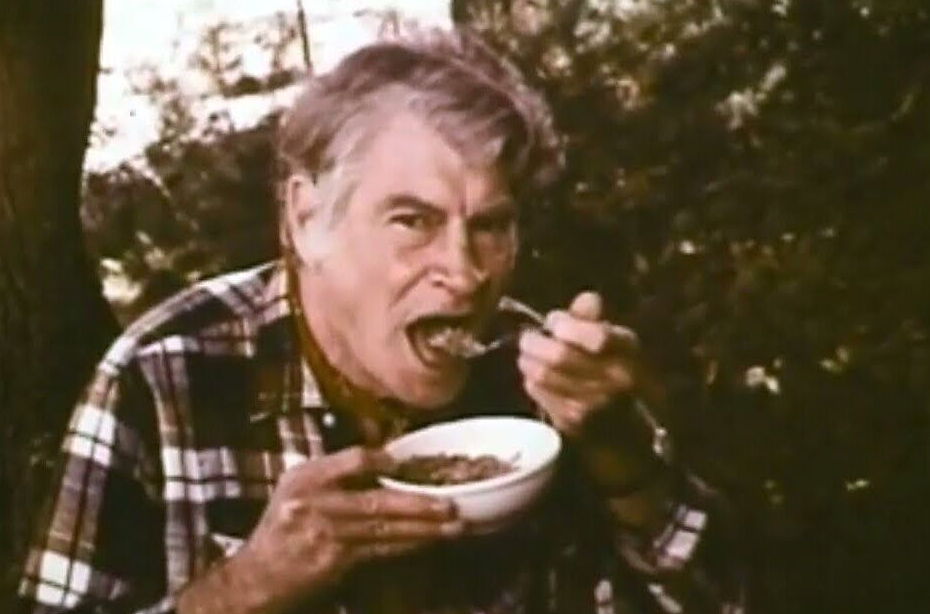
Television widened his audience dramatically. In 1974, he filmed 12 commercials for a cereal brand. The famous pine tree line turned him into a national curiosity. He also appeared four times on The Tonight Show.
Those broadcasts carried his message into living rooms across the country. He sampled edible plants on camera and spoke with unhurried assurance. An estimated 30 million viewers saw his late night appearances. The exposure turned foraging into mainstream spectacle.
In 1975, he joined The Sonny and Cher Comedy Hour for a foraging segment. He foraged edible flowers on set, extending his rustic persona. The appearance generated millions of immediate viewer engagements. That was remarkable for a niche culinary subject.
His television presence depended on contrast. He looked like a field naturalist, yet he moved through celebrity circuits. That juxtaposition heightened his appeal. It also made him a memorable lecturer on wild food.
Family and Domestic Fieldwork
On April 12, 1948, Gibbons married Freda Fryer in Honolulu. They met while he served with the U.S. Navy’s boatbuilding crews. The couple moved to Sunbury, Pennsylvania, in March 1953. Their marriage later produced three children.
Colleen was born in 1949, Michael in 1951, and Patricia in 1954. Each child inherited some measure of his botanical enthusiasm. Colleen joined a 1973 mushroom foraging expedition. Michael documented edible plant illustrations.
Patricia assisted with wild food educational tours from Sunbury. The family also planted 15 wild herb species on their 2 acre property. That demonstration plot lasted from 1968 to 1975. It functioned as both garden and classroom.
In October 1973, he led a family expedition across Arizona, Utah, Colorado, and New Mexico. They collected over 30 edible species for a magazine feature. He logged 200 field hours that autumn. Each specimen received location and bloom stage notes.
From 1966 to 1975, he volunteered roughly 100 hours yearly. He served three area natural foods societies without compensation. That unpaid labor reinforced his reputation for earnestness. He treated advocacy as a civic duty.
Final Years and Legacy
Gibbons died on December 29, 1975, in Sunbury, Pennsylvania. A ruptured aortic aneurysm ended his life at age 64. He left five unpublished articles and plans for a national institute. The abruptness amplified the mythology around him.
His herbarium specimens were stored at Boston University’s botanical collections. By 1976, his six books had sold more than 1.2 million copies. Public television seminars drew about 2 million viewers. His influence reached cooks, gardeners, and curious suburbanites.
His legacy was unusually variegated. He was part author, part demonstrator, and part itinerant ecologist. He made wild food seem intelligible, practical, and faintly adventurous. That combination secured his lasting distinction.
Key Takeaways
Gibbons made wild food seem intelligible, practical, and faintly adventurous. He did not merely collect plants; he cataloged them with almost clerical zeal. That precision separated him from mere eccentricity. It also gave his work lasting utility.
His life blended labor, study, marriage, media, and field experimentation. From 1911 to 1975, he traveled from child forager to household name. Few writers managed such a peculiar fusion of scholarship and spectacle. His legacy remains unusually textured.


