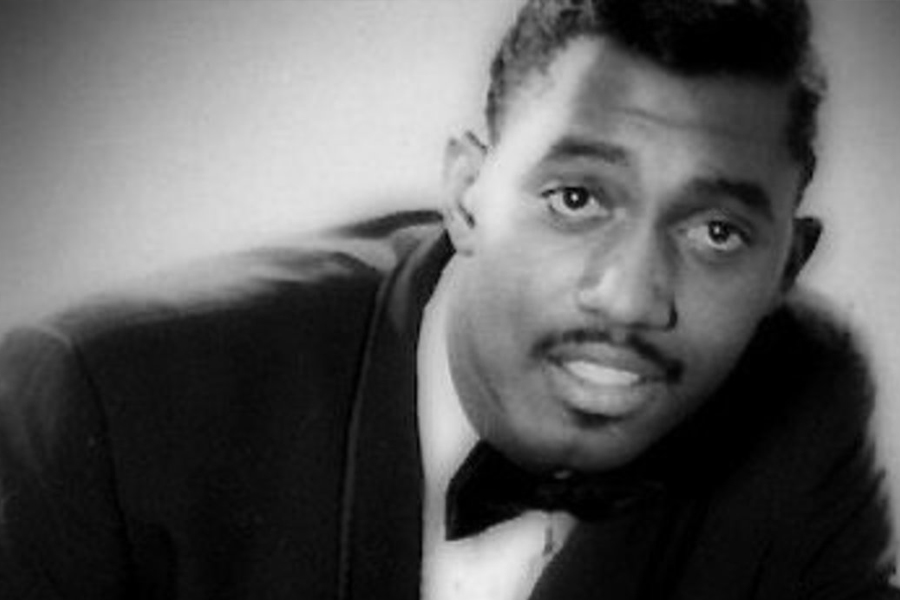
A Quiet Biography
Otis Lamont Williams remains a name wrapped in restraint, not spectacle. He is remembered chiefly through family history, not public performance. His story sits close to the larger Motown narrative, yet it never becomes part of the stage show. That contrast gives his life a distinct gravity. He was the son of Otis Williams, the celebrated founder and longtime leader of The Temptations. His mother was Josephine Rogers, the woman who anchored his earliest family world. Most accounts describe him as their only child. He worked in construction, a trade defined by labor, discipline, and practical skill. His death is reported as a workplace fatality, with the year inconsistently listed as 1983 or 1985. Those sparse facts form the hard outline of his biography.
Family Background
Family identity matters greatly in Otis Lamont Williams’s story. His father, Otis Williams, occupied a commanding place in American music history. The Temptations helped define the Motown era through harmony, polish, and commercial reach. That fame created a broad public shadow. Under that shadow, family members often became references rather than fully documented figures. Josephine Rogers appears as the maternal presence tied to Otis Lamont’s earliest years. Her role is important because private family structures often vanish inside celebrity narratives. Otis Lamont’s life was shaped by that tension between public renown and private ordinary life. He belonged to a household connected to notoriety, yet he did not live as a public figure. That distance matters when reading his biography. It explains why the surviving record is compact, uneven, and fragmentary.
A Brief Life
The available description of Otis Lamont Williams’s life is concise, almost austere. He is remembered as a working man, not an entertainer. That detail changes the texture of his story. Construction work suggests physical effort, routine obligation, and direct contact with the material world. It also suggests a life outside celebrity machinery. In family histories of famous people, such lives often receive only brief mention. They are not unimportant because they are quiet. They are quiet because they were lived beyond publicity. The uncertainty surrounding his death year adds a final layer of ambiguity. Some accounts say 1983, while others say 1985. That discrepancy is small in appearance, but it alters the chronology of memory. It leaves the timeline partially unsettled. Even so, the essential contours remain clear. He was young, private, and removed from fame’s central corridor.
Work and Circumstance
Construction work deserves attention because it defines more than occupation. It suggests a mode of living rooted in tangible results. Buildings rise because workers measure, lift, fasten, and endure. That kind of labor rarely attracts headlines. Yet it sustains the spaces where public life happens. Otis Lamont Williams appears to have occupied that world. His professional identity was practical rather than ornamental. There is a certain dignity in that. It reflects a life shaped by usefulness instead of performance. The reported fatal workplace accident gives the biography a severe edge. It also underscores the hazards present in labor-intensive trades. Fatal accidents in construction often expose the fragility beneath daily routine. In that sense, his death represents both personal loss and occupational risk. The life ended in the same material sphere in which it was lived.
The Weight of a Famous Father
Otis Williams’s fame gives Otis Lamont’s story its strongest surrounding frame. Otis Williams was not a minor musician. He was a foundational figure in one of Motown’s most durable groups. That kind of public stature tends to reorder family memory. Children of famous parents are often seen through the parent’s biography first. Otis Lamont Williams fits that pattern closely. He appears in recollections as a son, not as an independent public personality. This does not diminish him. It simply reveals how celebrity organizes attention. The father’s career was long, visible, and heavily documented. The son’s life remained local, personal, and mostly unrecorded. The contrast is stark. It creates a human asymmetry between applause and anonymity. That asymmetry is one reason his biography feels poignant. He stands at the edge of a very famous legacy without being absorbed into it.
Reported Family Details
The family record around Otis Lamont Williams is compact, but it is still worth organizing carefully.
| Detail | Information |
|---|---|
| Full name | Otis Lamont Williams |
| Known as | Otis Lamont |
| Father | Otis Williams |
| Mother | Josephine Rogers |
| Siblings | None commonly reported |
| Occupation | Construction worker |
| Death | Workplace fatality |
| Reported death year | 1983 or 1985 |
This table captures the surviving public shape of his identity. It is sparse, yet it conveys the essential facts. There is no widely circulated catalog of achievements, performances, or business ventures. There is no public financial profile attached to his name. There is little evidence of a cultivated public persona. Instead, the available data points toward privacy. That privacy is not a gap in dignity. It is the condition of a life that did not seek public exhibition. Many biographies of famous families treat such figures as peripheral. In truth, they often reveal the cost of celebrity from the inside. Otis Lamont Williams’s life is one of those interior records.
Why the Discrepancy Matters
The conflicting death years are more than a clerical nuisance. They show how thin the record can become around private lives. When a person does not circulate widely in public media, details can drift. A year becomes uncertain. A job title becomes generalized. A family relation becomes repeated without expansion. That drift should not be mistaken for insignificance. It indicates the limits of public documentation. For Otis Lamont Williams, the uncertainty around 1983 and 1985 marks the boundaries of what can be stated firmly. It also reminds readers to distinguish between confirmed detail and inherited repetition. Biographical precision matters because it respects the person behind the record. Even a short life deserves exactness where possible. When exactness is unavailable, the uncertainty itself becomes part of the story.
Public Memory and Private Loss
Otis Lamont Williams is remembered less as an individual celebrity and more as a private loss within a celebrated family. That kind of remembrance is common, but it remains emotionally dense. Family members often hold the emotional architecture of a famous life. They are not scenery. They are the unseen context. In his case, the remembrance centers on sonship, labor, and mortality. He was not known for recordings or public appearances. He was known because he mattered to people whose names were already public. That is a different kind of historical presence. It is quieter, but not weaker. It survives through family references, brief biographical notes, and the memory of a life interrupted. The absence of wider documentation gives the name a subdued resonance. It invites a more careful reading. It asks readers to notice the difference between fame and personhood.
Key Takeaways
Otis Lamont Williams was the son of Otis Williams and Josephine Rogers. He is commonly described as their only child. His life remained private and outside the entertainment industry. He worked in construction, which placed him in a physically demanding profession. His death is reported as a workplace fatality. The year of death is inconsistently listed as 1983 or 1985. Public records on his life remain limited. His story is most often told in relation to his father’s long Motown legacy.


